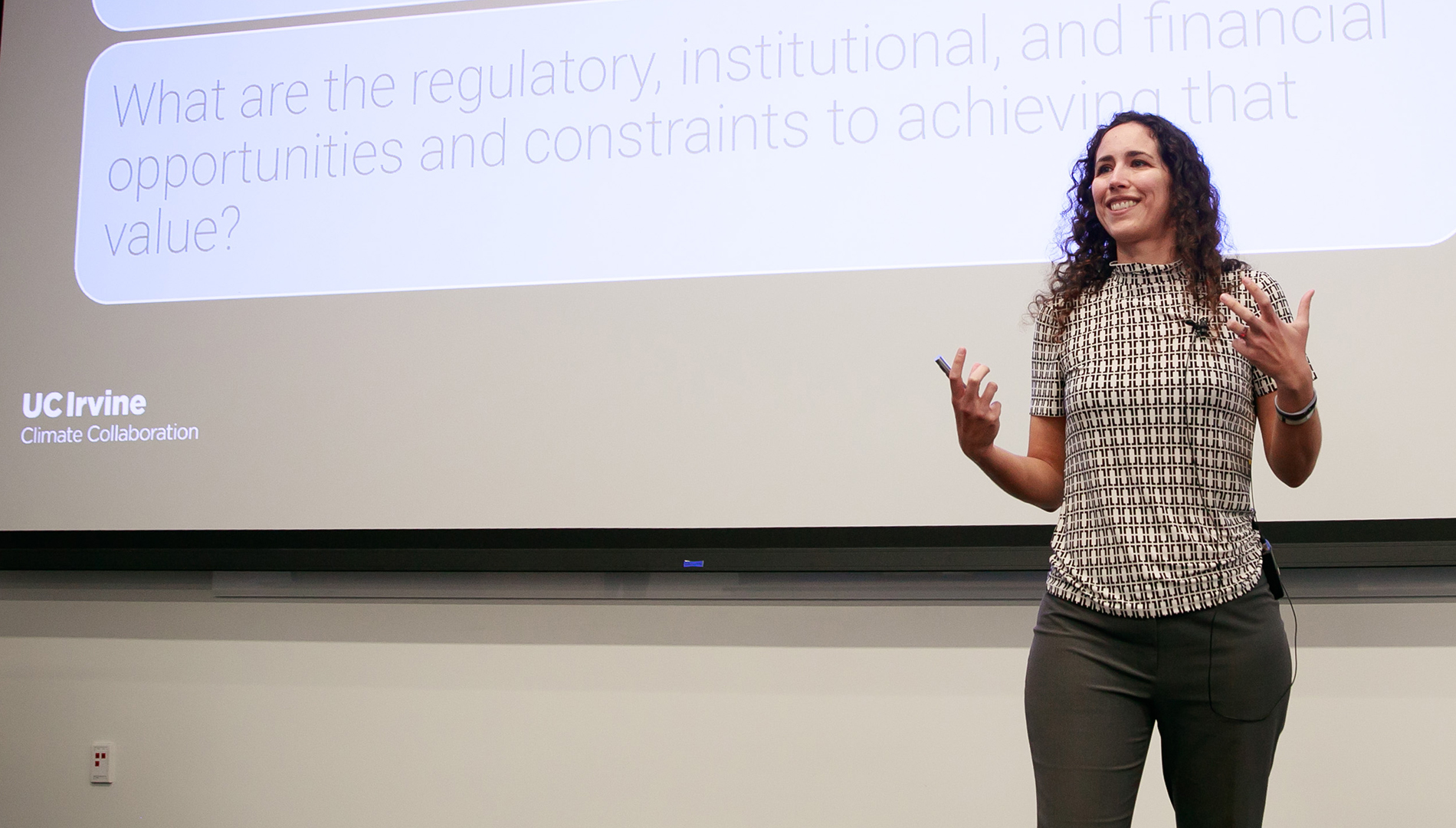
“We don’t want to just write reports and academic articles that sit behind paywalls. We want to produce data, models, and information that are actually valuable and useful to you.” — Nicola Ulibarrí (photos by Han Parker)
UCI’s Healthy Coast Project tackles Orange County’s beach crisis as El Niño looms
By Matt Coker
Urgency filled the air inside the Interdisciplinary Science and Engineering Building Nov. 5 as experts, policymakers, and community members gathered for the kickoff of the Healthy Coast Project — a collaborative initiative led by the UC Irvine Climate Collaboration aimed at rescuing Orange County’s beaches from a looming crisis.
The event, titled “Understanding How to Restore Sand to Orange County Beaches as El Niño Builds,” brought together campus climate scholars, the U.S. Geological Survey (USGS), and the National Oceanic and Atmospheric Administration (NOAA) to confront a stark reality: Orange County’s beaches are losing sand at an alarming rate, and this winter’s El Niño could bring the highest sea levels California has ever seen.
A beach at risk
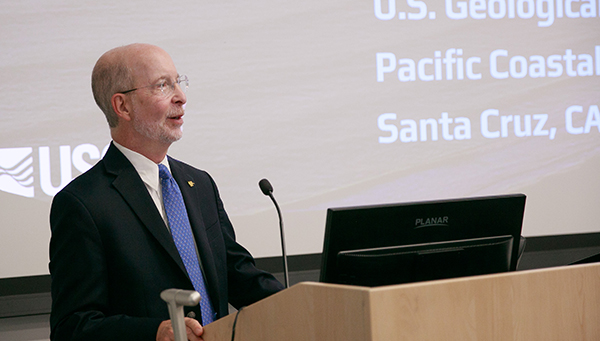
Jon Gould, dean of the School of Social Ecology and moderator for the day’s workshop, succinctly summed up the project’s mission.
“Beaches desperately need sand,” he said. “Sand, way over here. How do we get the sand from over there to the beaches? Is there a way that we can have storm floods carry that sand to the coast without raising flood risk?”
His questions set the tone for a meeting that was equal parts scientific deep dive and community call-to-action.
Congressman Dave Min (D-Irvine) opened the proceedings with a reminder of what’s at stake. “The beach is really part of our DNA as Californians, and preserving it is now more than ever so important,” he said.
Fresh from winning his second two-year term in the U.S. House of Representatives, Min didn’t shy away from controversy, pointing to the U.S. Army Corps of Engineers’ role in sand depletion.
“To the extent that the Army Corps and its activities have deprived our beaches of sand, I think it’s on them to pay for the damage they’ve caused,” he said. “You break it, you buy it, and I think in this case the Army Corps needs to step up.”
The science of sand

Research Scientist Jon Warrick of the USGS explained the science behind the crisis. “Our highly modified landscape inland of our beaches produces less sand overall ... and that sand is a critical resource for the coast,” said Warrick, who then highlighted the paradox at Huntington Beach.
“The reason that beach is growing is not because the Santa Ana River is producing sediment,” he said. “The reason that beach is growing is because we place a lot of new sand up at Surfside.”
The implication was clear: Natural processes alone aren’t enough anymore — human intervention is essential.
Sarah Pease, program manager at NOAA’s National Centers for Coastal Ocean Science, emphasized the importance of science-driven solutions.
“NCCOS funds science that explores natural infrastructure and management actions that protect communities, infrastructure, and ecosystems from sea level rise and storm surge,” she said. “Our role is to foster partnerships to assist our project teams in applying their research to coastal decision-making processes and applications.”
Innovative solutions
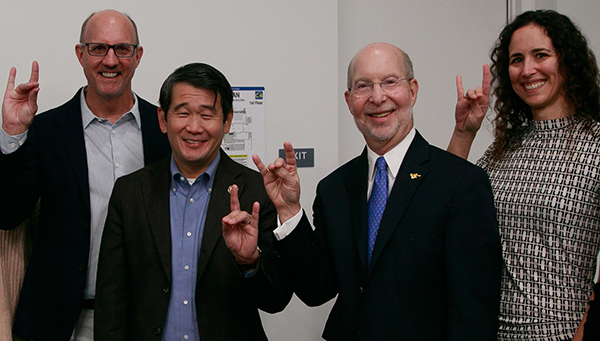
Brett Sanders, director of the multidisciplinary UCI Climate Collaboration, laid out the challenge bluntly: “We’re in an unsustainable system state right now,” he said. “How do we transfer our system ... into a more sustainable system state?”
The Chancellor’s Professor of civil and environmental engineering — and, by courtesy, urban planning & public policy (UPPP) — focused much attention to Prado Dam, the major flood control and water-conservation dam on the Santa Ana River near Corona and Chino Hills, which are relatively close to the Orange County coast.
Because the Santa Ana River begins many miles away in the San Bernardino Mountains, tons of sediment accumulates at Prado Dam. Unfortunately, as Sanders informed, “moving sediment is really, really expensive.” Which gets to the point of the partnership between UCI and dozens of regional agencies. That is, to tap into one another’s data and expertise so creative, nature-based solutions to coastal sand loss can be found.
“The more we can rely on nature, via floods or waves, to move the sediment,” Sanders says, “the more we can get it moved for free.”
From dam sediment to shoreline solutions
Professor of UPPP Nicola Ulibarrí led an interactive session, gathering input from both in-person and Zoom participants. Along with Professor of economics & public policy Ed Coulson, Ulibarrí is spearheading the UCI Climate Collaboration’s effort to ensure Orange County residents see real value in the Healthy Coast Project.
“None of this will happen unless it makes sense for people,” Ulibarrí emphasized.
She and Coulson are assembling a multidisciplinary stakeholder team, likely including many kickoff attendees. “We want to ensure we’re doing good science,” Ulibarrí said. “We don’t want to just write reports and academic articles that sit behind paywalls. We want to produce data, models, and information that are actually valuable and useful to you.”
The discussion, guided by Ulibarrí, explored the potential of Prado Dam sediment transport — highlighting benefits like re-widening beaches, restoring habitats, and using river power to lower sand transport costs. Clearing sediment from the dam could also improve water security by increasing reservoir capacity for storm runoff.
However, participants raised concerns about mobilizing legacy contaminants, heavy metals, or bacteria in dam sediment. Natural sediment movement relies on rare, intense floods, and upstream water recycling further reduces river discharge. Mechanical transport is costly and logistically complex, while strict water quality regulations and public perception add further challenges.
Ulibarrí then asked what’s working well and what needs improvement. Audience members noted agencies are starting to prioritize sediment management and coordination with the Army Corps of Engineers is improving, allowing dredged material to be used for beach nourishment. Still, attendees called for more unified, cross-jurisdictional governance, rapid-response protocols for post-flood sediment movement, and nature-based shoreline retention strategies to keep sand on beaches longer.
Feedback such as this is vital to the Healthy Coast Project, according to Ulibarrí: “We want to make sure this is a beneficial project for all of Orange County.”
A path forward
The kickoff meeting was actually a rallying cry. As El Niño threatens to bring record sea levels, the stakes for Orange County’s beaches have never been higher. The collaboration between UC Irvine, USGS, NOAA, and local agencies is a testament to the power of science, policy, and community working together.
As Dean Gould summed up, “What their research has found is that it is possible to replenish that sand through human engagement, through human action.” The challenge now is to turn that possibility into reality — before the waves wash away more than just sand.
The event is available on YouTube.