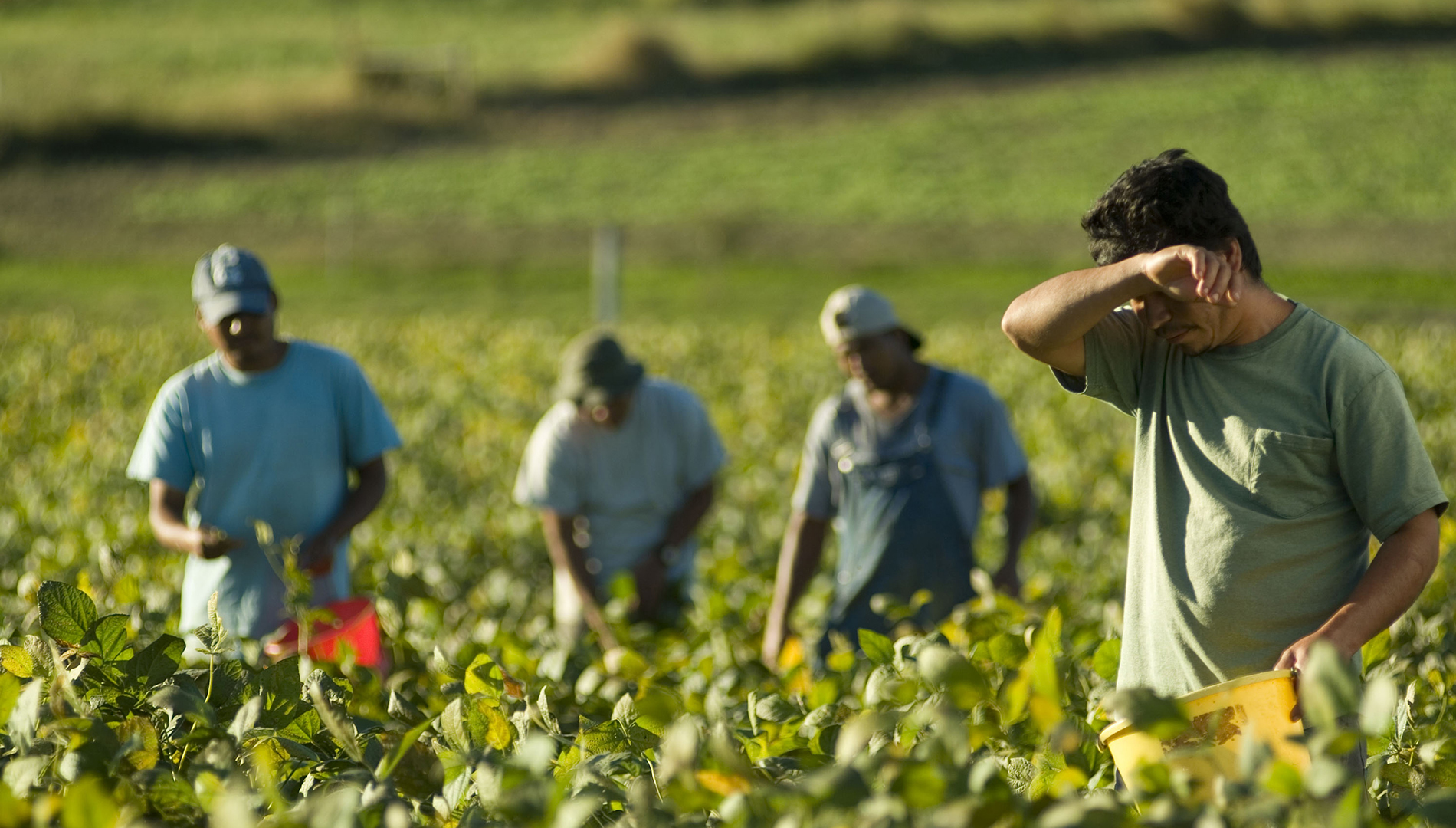
UC Irvine researchers received a grant to work on producing better data on labor trafficking. Banner image credit: National Human Trafficking Resource Center.
UC Irvine team awarded grant to build clearer picture and push for better data to drive change
By Mimi Ko Cruz
A pair of UC Irvine researchers have received a $20,000 grant to address one of the most persistent blind spots in the fight against human trafficking: the chronic undercounting of labor trafficking victims in Orange County.

Angela Robinson, an assistant researcher with UCI’s Frontline Research to End Exploitation (FREE) Institute, and Iza Camarillo, research director for the university’s Labor Center, were awarded the grant by the Collaborative to End Human Trafficking, a philanthropic organization co-founded by Susan Samueli and Carey Clawson.
Their project takes aim at a gap between what global data tells us about labor trafficking and what local systems are actually capturing.
According to the International Labour Organization, an estimated 77% of human trafficking victims worldwide have experienced labor trafficking, Robinson noted. Yet, labor trafficking victims are identified far less often than sex trafficking victims, nationally and locally.
The Orange County Human Trafficking Task Force Victim Report (2025) found that among identified victims in Orange County, less than 12% had experienced labor trafficking.
“Prevalence data suggest that labor trafficking is more prevalent than sex trafficking, yet labor trafficking victims are identified at alarmingly low rates,” Robinson said.
The researchers say the gap is not simply a matter of labor trafficking being less common. It reflects deep structural failures — in labor enforcement, immigration systems and the frameworks used to identify trafficking — that allow exploitation to go undetected and unreported. Victims, often economically disadvantaged migrants fearful of law enforcement, frequently do not self-identify.
“Labor trafficking is fundamentally a workers’ rights issue, yet it often goes unrecognized within the very systems designed to protect workers,” Camarillo said. “By bringing a labor perspective to this research, we hope to better understand where those systems fall short and identify opportunities to strengthen protections for vulnerable workers.”
“A lot of times, people don’t initially identify themselves as being victimized, or as trafficking victims,” Robinson said. “That's part of what we'll be asking about.”
To begin closing that gap, Robinson and Camarillo will draw on the expertise of UCI’s FREE Institute and the Labor Center to conduct a landscape analysis, convening a series of focus groups and meetings with a broad range of stakeholders — including labor organizations, law enforcement, service providers, survivors of labor trafficking, researchers and government agencies — to identify alternative and underutilized data sources that could better reflect the true scope of labor trafficking in the county.
The project will culminate in a policy brief outlining strategies for strengthening data collection and analysis, as well as a public symposium to share findings and build momentum among stakeholder groups.
Camarillo said the project will be strengthened by two key organizational partners: The Orange County Employees Association (OCEA), OC's largest public sector labor union with nearly 20,000 members across public institutions, including social workers, law enforcement personnel, and staff at the District Attorney's and Public Defender's offices. And, the Orange County Labor Federation (OCLF), the AFL-CIO's regional central labor council representing more than 90 unions and nearly 300,000 workers across the county, will also play a key role. Together, the partnerships will help connect the research team with workers, labor organizations and institutions involved in identifying and responding to labor exploitation.
“Understanding labor trafficking requires examining the conditions that make workers vulnerable to exploitation and the barriers that prevent them from seeking help,” Camarillo said. “Our partnerships with the Orange County Employees Association and the Orange County Labor Federation are essential to ensuring this research is informed by the experiences of workers and the institutions that serve them. These relationships help bridge the gap between academic research and the realities workers face in Orange County. ”
The researchers say they hope their work will not only produce better data, but ultimately expand support and services for labor trafficking victims who have for too long remained out of sight.
UCI's FREE Institute is affiliated with the Alec Glasser Center for the Power of Music & Social Change and the Blum Center for Poverty Alleviation and the School of Social Ecology. The Labor Center, also housed within the School of Social Ecology, conducts research, provides educational opportunities and works in partnership with labor organizations and community groups to address challenges workers face in Orange County.